The internet has changed how Muslims work, learn, and communicate. Qur’an lessons, Islamic lectures, business meetings, even family gatherings now happen online. Yet the same technology that connects us can also expose us to harm indecent ads, misleading content, and social distractions that weaken faith.
The challenge is clear: how can Muslims benefit from digital progress while keeping their online lives halal and pure?
The answer lies in using smart technology with faith-based design tools that combine intelligence with Islamic values to build a cleaner, safer, and more disciplined online experience.
What a “Halal Digital Lifestyle” Really Means
A halal digital lifestyle is not about cutting off from the world or avoiding modern tools. It’s about living with awareness using technology responsibly, purposefully, and in line with the limits Allah has set.
It means:
- Protecting your eyes and heart from haram exposure.
- Safeguarding privacy and dignity in digital interactions.
- Encouraging beneficial learning and honest communication.
- Building online habits that reflect modesty and sincerity.
In short, a halal digital life is one where devices serve your deen, not distract you from it.
The Problem: Exposure Without Boundaries
Every Muslim family faces the same problem: harmful content appears without warning. Ads, pop-ups, or suggested videos can show indecent or inappropriate visuals, even on innocent websites.
Algorithms are designed for engagement, not ethics. They promote what attracts attention, not what protects faith. Over time, this constant exposure dulls sensitivity — what once seemed shameful becomes normal.
Parents feel powerless trying to monitor every device. Young Muslims, often online for school or work, face temptations that no previous generation had to manage.
This is why faith-aligned smart protection has become essential.
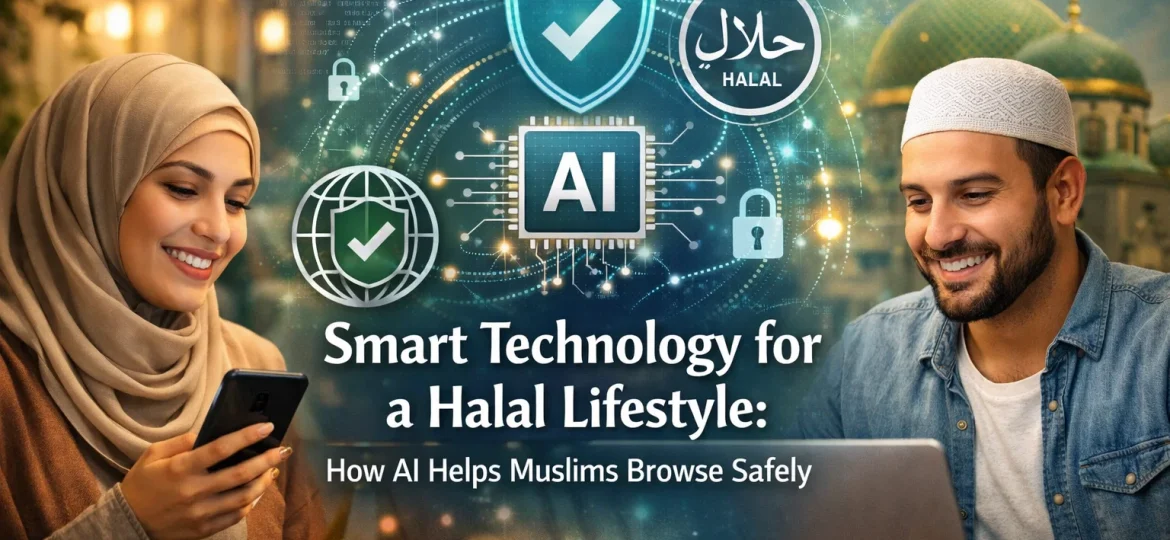
How AI Helps Muslims Browse Safely
Artificial Intelligence (AI) is often seen as something abstract or technical, but in truth, it’s just a system that learns patterns and makes decisions based on data. When used with good intention, AI can become a guardian rather than a threat.
Here’s how it supports halal browsing:
1. Filtering What Shouldn’t Be Seen
AI can detect and block haram material — including explicit images, indecent videos, and websites promoting immorality. It recognizes visual patterns, language tone, and contextual meaning, not just keywords. That means protection is more precise and less disruptive.
2. Creating a Family-Friendly Internet
Smart filtering allows parents to manage access for children without constant checking. Through dashboards and monitoring tools, they can limit time, approve sites, and receive alerts when unsafe content is attempted.
3. Protecting Privacy and Dignity
Islam values modesty not just in appearance but in behavior. AI-driven privacy systems, such as HalalVPN, encrypt browsing data and block trackers that collect personal information. This prevents exploitation and maintains discretion — a digital form of haya.
4. Blocking Hidden Pathways to Sin
Many harmful sites disguise themselves under misleading names or thumbnails. AI systems analyze hidden links, metadata, and behavior patterns to stop these before they reach your screen. It’s like locking the back door of your digital home.
5. Encouraging Positive Use
AI can also recommend educational Islamic content, halal entertainment, and productive activities. When trained to recognize what is beneficial, it nudges the user toward balance — learning, reflection, and purposeful use.
The Halal VPN Example
HalalVPN is one of the first systems built with these faith-based values. Its AI technology continuously scans for haram material while securing user privacy.
It:
- Filters indecent or blasphemous content before it appears.
- Protects families across multiple devices.
- Offers parental controls to monitor children safely.
- Encrypts data to maintain user dignity.
- Improves over time through community feedback from Muslim users.
In short, HalalVPN combines security with spirituality. It doesn’t only block it purifies.
Why Smart Protection Matters for Muslims
The Prophet ﷺ said, “When Allah loves a servant, He protects him from the world.”
In our time, part of that protection can come from conscious use of technology.
A halal internet environment helps Muslims:
- Maintain modesty in private and public life.
- Strengthen family trust and peace of mind.
- Stay focused on productive goals instead of distractions.
- Avoid gradual exposure that weakens iman.
- Use technology as a blessing, not a burden.
By creating a digital environment that aligns with Islamic ethics, Muslims can live in the modern world without compromising their values.
A Practical Approach for Muslim Families
Faith-based AI tools like HalalVPN work best when paired with discipline at home. Here’s how families can build a stronger halal environment:
- Set an intention for online use. Make dua before using devices and remind your family that every action online counts with Allah.
- Educate children about modesty online. Teach them early that digital behavior is part of faith — how we type, comment, or post reflects who we are.
- Schedule screen-free time. Dedicate time daily or weekly for Qur’an study, outdoor play, or conversation without devices.
- Lead by example. Children learn digital habits from what they see, not just what they’re told.
- Choose halal tools. Replace generic apps with ones designed for Muslims, especially for privacy and safety.
When faith becomes part of digital planning, technology turns from a risk into a source of reward.
The Broader Vision: Halal Technology for the Ummah
Smart protection is only one part of the halal technology movement. The future could include:
- Islamic AI systems for education and translation.
- Muslim-owned social platforms promoting respectful interaction.
- Ethical entertainment services free from vulgarity and distortion.
- Tools that integrate Islamic reminders — prayer times, dua prompts, or Qur’an verses — into daily tech use.
When Muslims lead in ethical innovation, the world benefits. Halal technology sets a new standard: modern yet moral, intelligent yet humble.
Faith and Innovation Can Coexist
Islam doesn’t demand rejection of modern tools — it asks for balance.
The Qur’an says, “And We have certainly honored the children of Adam.” (17:70)
That honor includes the ability to invent, but it also requires responsibility.
Technology should never dominate the believer; it should serve the believer’s path to goodness.
When Muslims use tools like Halal VPN and similar systems with the right intention, they uphold both progress and purity.
Conclusion
A halal lifestyle in the digital age is not about fear it’s about focus. Artificial Intelligence and smart technology, when guided by faith, can become protectors of modesty, privacy, and peace of mind.
Muslims have the opportunity to lead in shaping a safer, halal internet one that nurtures iman instead of weakening it.
Using tools like Halal VPN is part of that effort: combining innovation with intention, intelligence with integrity.
Technology cannot replace taqwa, but it can help us practice it more consistently in an increasingly digital world.
The goal is simple: browse with purpose, connect with sincerity, and let every click bring you closer to Allah, not further away.
Frequently Asked Questions (FAQs)
1. What makes smart technology “halal”?
Smart technology becomes halal when it aligns with Islamic ethics — protecting modesty, preventing exposure to haram material, and respecting privacy. It should serve beneficial purposes, not promote indecency or wastefulness.
2. How does AI know what content is haram?
AI systems are trained using large sets of examples and rules. Faith-based tools like HalalVPN are guided by Islamic standards, allowing the system to detect and block indecent visuals, language, and behaviors automatically.
3. Does halal filtering block educational or neutral sites?
Good halal filters focus on context. They analyze whether content is genuinely informative or harmful. For instance, a medical article about health is allowed, while a promotional site for haram activities is blocked.
4. Can families customize the level of filtering?
Yes. Tools such as HalalVPN include parental dashboards that let users adjust restrictions, set time limits, and manage devices for different age groups — offering flexibility while maintaining safety.
5. Is relying on technology enough to stay halal online?
No. Tools are only part of the solution. Personal responsibility, awareness, and intention remain essential. Muslims must combine digital safeguards with taqwa and sound judgment in their online choices.