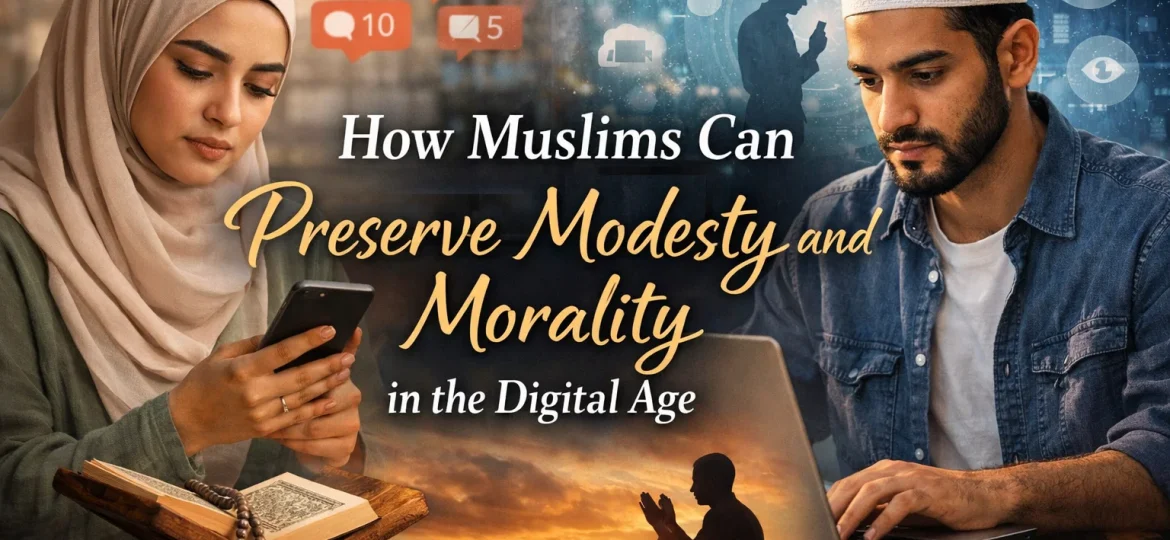
Every click, scroll, and notification today shapes how we think, speak, and act. The digital world connects us in remarkable ways but it also tests our values more than ever before.
For Muslims, haya modesty is not just about dress or speech. It is a complete way of living that includes what we watch, what we post, and how we behave online. The Prophet ﷺ said, “Every religion has its distinct characteristic, and the distinct characteristic of Islam is modesty.”
Preserving modesty and morality online is not simply about avoiding temptation. It is about protecting the purity of the heart and the dignity of the Muslim identity in a world that rewards exposure, not restraint.

Understanding Modesty Beyond Appearance
In the Qur’an, Allah commands both men and women to lower their gaze and guard their modesty (Surah An-Nur 24:30–31). This instruction extends naturally into the digital space.
Modesty (haya) is not limited to how we dress it includes what we choose to see and share. A Muslim can be fully clothed yet immodest online by posting inappropriate selfies, engaging in flirtatious messages, or following indecent pages.
Digital modesty, therefore, begins with awareness: every post, picture, or video is a reflection of one’s inner state. When modesty leaves the heart, it soon disappears from actions.
The Erosion of Modesty in Online Culture
Modern platforms are built for attention, not ethics. The more one reveals, the more one is rewarded with likes, followers, and visibility. This culture subtly teaches that exposure equals value.
For Muslims, this is a moral trap. It normalizes what Islam discourages: excessive self-display, gossip, vulgar humor, and constant comparison. Even when intentions are harmless, algorithms push users toward content that blurs boundaries.
Over time, these habits can numb the conscience. What once seemed inappropriate becomes routine. Jokes, trends, and videos that would never be acceptable in person become “just for fun” online. This slow erosion is dangerous precisely because it feels harmless.
Why Preserving Morality Online Matters
1. The Internet Shapes the Heart
The Prophet ﷺ said, “When the son of Adam commits a sin, a black spot appears on his heart.” Every interaction—every video, comment, or image—has a spiritual effect. Repeated exposure to indecent material darkens the heart, even if we justify it as “normal.”
2. Digital Footprints Are Permanent
Unlike spoken words, online actions are recorded and often permanent. A comment written in anger, a photo shared impulsively, or a post lacking modesty can resurface years later. Accountability in the Hereafter will include what we did with our digital tools.
3. The Family Environment Is Affected
Children imitate what they see. If modesty disappears from parents’ screens, it disappears from the home. A clean, disciplined digital space strengthens family trust and teaches the next generation how to live with dignity online.
Practical Ways to Uphold Modesty and Morality Online
Preserving morality in the digital age doesn’t mean withdrawing from technology. It means using it with niyyah (intention), balance, and awareness.
1. Watch With Purpose
Before opening any app or video, ask: “Will this bring benefit or distraction?” Replace idle scrolling with intentional content Islamic lectures, educational channels, or news sources that align with your values.
2. Control What You Follow
Unfollow accounts that constantly show indecent visuals or promote lifestyles contrary to Islamic principles. Algorithms feed what you engage with. Curate your feed to protect your peace and your faith.
3. Guard the Tongue Even on the Keyboard
Online modesty includes speech. Avoid gossip threads, harsh debates, and mocking comments. The Prophet ﷺ said, “A true Muslim is the one from whose tongue and hands others are safe.” Today, that includes our keyboards and comment sections.
4. Avoid Excessive Self-Exposure
Posting every detail of your life invites unnecessary attention. Choose privacy over performance. Share content that benefits others—knowledge, reminders, or experiences that encourage goodness.
5. Set Boundaries in Communication
Whether in private messages or professional chats, maintain respectful tone and distance. Avoid casual conversations that could lead to emotional attachment or fitnah. The Qur’an advises believing women not to speak in soft or suggestive tones (33:32); this applies to digital communication as well.
6. Use Digital Protection Tools
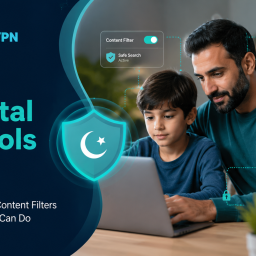
Technology can assist in maintaining modesty. Filtering tools like HalalVPN help block explicit websites, ads, and visual temptations automatically. This safeguard allows individuals and families to browse without constant worry of exposure.
Comparison: Typical Internet Use vs. Modesty-Conscious Browsing
| Aspect | Typical Internet Use | Modesty-Conscious Browsing (with HalalVPN) |
| Content Exposure | Frequent exposure to indecent ads, influencers, and explicit visuals | Harmful or haram content filtered before appearing |
| Privacy | Personal data and behavior tracked by social platforms | Private, encrypted connection respecting user dignity |
| Posting Culture | Encourages self-promotion and revealing content | Encourages beneficial, respectful sharing within limits |
| Family Environment | Parents struggle to monitor children’s activity | Parental controls and clean browsing reinforce shared values |
| Spiritual Impact | Desensitization and decreased mindfulness | Peace of mind, increased awareness of faith while online |
Community Responsibility: Reviving Haya in the Ummah
Modesty is not an individual duty alone—it is a community value. When modesty becomes rare, immorality becomes entertainment. The Muslim ummah must lead by example in how we use and shape technology.
This includes supporting platforms that align with Islamic values, encouraging developers to build faith-based tools, and promoting modest influencers who balance professionalism with piety.
Communities can also organize workshops for youth about digital ethics, privacy, and Islamic manners online (adab al-internet). These discussions help young Muslims understand that protecting their iman online is not outdated—it’s essential.
Teaching Children Digital Modesty
Children absorb habits long before they understand rules. Teach them early that the internet is not a playground without limits.
Practical steps include:
- Watching educational content together and discussing what’s appropriate.
- Setting device-free family hours, especially around meals or prayer times.
- Explaining why modesty online protects them from harm, not freedom from joy.
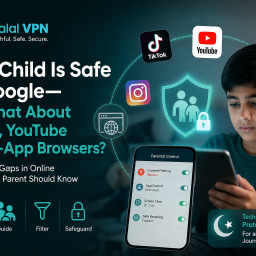
- Using tools like HalalVPN to automatically block inappropriate sites and videos.
When children associate faith with peace and clarity, not restriction, they learn to value modesty from the heart.
The Role of Technology in Preserving Morality
Technology itself is neutral it depends on how we design and use it. The challenge is that most digital tools are created for mass markets with no concern for faith or ethics.
This is why Halal VPN and similar initiatives matter. They redefine technology for the Muslim audience: security that respects modesty, and access that filters haram exposure.
Such solutions remind us that protecting morality does not mean rejecting progress—it means guiding it. Muslims have always led in ethical innovation, from trade to science. Today, the field is digital safety.
A Balanced Digital Life
True modesty online is not about fear—it’s about freedom. Freedom from temptation, comparison, and endless distraction.
Balance your digital life by pairing faith with awareness:
- Use technology for knowledge and connection, not escape.
- Keep Qur’an recitation and remembrance part of your screen time.
- Follow Islamic scholars, educators, and community voices who inspire you to improve.
- Take regular breaks from devices to reconnect with real-world ibadah and family.
When faith guides the screen, technology becomes a tool of empowerment, not temptation.
Conclusion
The digital age will continue to evolve, but the principles of Islam remain timeless. Modesty and morality are not old-fashioned—they are shields for the heart in a world of constant exposure.
Preserving them online requires intention, awareness, and the right tools. Start by cleansing your feed, setting limits, and making your devices reflect your deen.
Every Muslim has the power to shape a halal digital space one family, one phone, one screen at a time.
By protecting modesty, we protect faith itself.
Halal VPN was created for this very purpose: to help Muslims use technology with dignity, security, and peace of mind.
Modesty is not just how we dress; it’s how we live on every screen, in every click, and in every moment Allah allows us to connect.