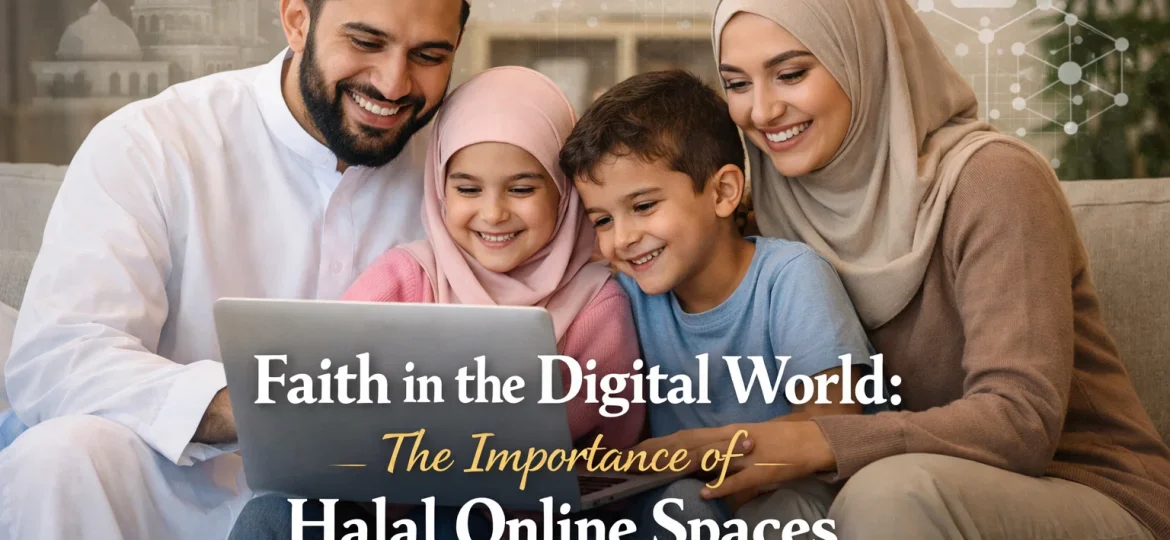
The internet has become the new marketplace of ideas, a space where people share, learn, buy, and express themselves. For Muslims, this world presents both opportunity and challenge. On one hand, it offers access to Islamic knowledge, global community, and tools for good. On the other, it floods the senses with content that can weaken faith, distort values, and blur moral boundaries.
The question for the modern Muslim is not whether to be online, but how to be online without losing sight of iman. That is where the idea of Halal Online Spaces becomes vital.
The Digital Reality Muslims Face
The online environment is not designed with Islamic values in mind. Most platforms reward attention, not virtue. The more shocking, controversial, or revealing the content, the more it spreads.
This system exposes Muslims especially the youth to influences that are often contrary to Islamic teachings. From indecent visuals and harmful ideologies to manipulative advertising, the digital world is filled with elements that test modesty and faith.
Yet complete withdrawal is not the answer. The internet is where we work, learn, and interact. What Muslims need is not isolation but reformation transforming how we use digital spaces into something halal, healthy, and purposeful.
What Makes a Space “Halal” Online?
A Halal Online Space isn’t limited to Islamic websites or religious content. It’s any digital environment where faith, decency, and privacy are respected.
To qualify as halal, an online space should reflect three key values:
1. Protection from Haram Content
A halal space shields users from indecent or corrupt material. This includes explicit visuals, gossip, slander, and content that promotes sin or immorality.
2. Respect for Privacy and Dignity
Islam places great emphasis on guarding one’s private life. A halal platform should protect user data, prevent exploitation, and avoid exposing personal details unnecessarily.
3. Purposeful and Beneficial Use
The Prophet ﷺ said, “Part of the perfection of one’s Islam is leaving that which does not concern him.”
A halal online environment encourages beneficial engagement learning, communication, or business and discourages mindless entertainment or harmful curiosity.
Why Halal Online Spaces Matter
The internet is not just a technical tool it shapes beliefs, emotions, and habits. The spaces we frequent influence what we think is normal.
When Muslims spend time in unfiltered, permissive digital environments, subtle changes occur:
- Modesty weakens.
- Privacy feels outdated.
- Islamic boundaries seem restrictive.
- Haram becomes “just content.”
Halal online spaces restore perspective. They remind users that technology can serve faith instead of opposing it.
The Impact of Halal Digital Environments
- Spiritual Health: Exposure to clean, respectful content preserves the heart’s softness and sincerity.
- Mental Clarity: Less exposure to indecency reduces anxiety, envy, and comparison.
- Community Confidence: Muslims feel proud to use technology that aligns with their values.
Challenges Muslims Face in Current Digital Platforms
Even with the best intentions, it is nearly impossible to avoid haram material entirely online. Ads, autoplay videos, and social media suggestions are designed to keep users engaged, not spiritually safe.
Key challenges include:
- Algorithmic temptation: Once a user clicks on questionable content, similar material floods their feed.
- Privacy invasion: Apps and websites collect personal data without consent.
- Cultural pressure: Influencers normalize lifestyles that contradict Islamic principles.
- Misinformation: Religious distortions and false narratives spread easily through unverified sources.
For the average Muslim, staying “clean” online requires more than self-discipline — it needs a supportive, faith-aware environment.
Comparison: Conventional Digital Spaces vs. Halal Online Spaces
| Feature | Conventional Digital Spaces | Halal Online Spaces (with tools like Halal VPN) |
| Content Control | Open access; indecent and harmful content widespread | Faith-based filters remove haram and explicit material |
| Privacy | Data tracked and sold to advertisers | Private, encrypted browsing that guards user dignity |
| Cultural Tone | Promotes materialism, exposure, and constant comparison | Encourages modesty, balance, and purpose |
| Community Values | Individualistic; minimal moral boundaries | Family-friendly, respectful of Islamic norms |
| User Experience | Addictive design; endless scrolling | Calm, clean, and intentional browsing environment |
A halal space doesn’t only block — it redefines the online experience around values Muslims share: respect, purpose, and responsibility.
The Role of Technology in Building Halal Spaces
While much of the internet is uncontrolled, technology can also be used to fix the problem it created. When built with Islamic ethics in mind, modern tools can actively protect faith.
Halal VPN is one such innovation designed to create a Halal Digital Environment for Muslims worldwide.
It offers:
- Faith-based filtering: Removes explicit and haram material at the network level.
- Parental control features: Helps families manage screen time and protect children from unsafe platforms.
- Privacy-first security: Hides browsing data and location, ensuring digital dignity.
- Multi-device coverage: Protects every member of the household with one system.
By combining privacy, protection, and halal filtering, HalalVPN doesn’t just secure data — it secures hearts.
Building a Halal Online Environment at Home
Creating a halal space begins at home, not only with technology but with values.
1. Set Family Intentions
Agree as a household to use the internet in ways that support faith. Make dua that Allah grants barakah in your online interactions.
2. Discuss Digital Etiquette (Adab Online)
Teach children and teens how to behave with humility, respect, and honesty online. Remind them that Allah is watching every message and click.
3. Balance Screen Time with Real Life
Set limits on recreational use. Encourage reading, exercise, and worship to replace excessive scrolling.
4. Encourage Beneficial Content
Support Islamic educators, halal businesses, and modest creators. Every view and share strengthens halal ecosystems.
5. Install Protective Tools
Use filters, monitoring systems, and VPNs built for Muslims. These help maintain modesty without constant policing.
The Broader Vision: Reclaiming the Digital Ummah
Halal online spaces are not just about personal purity they are about collective revival.
The Muslim ummah has always thrived when it led with ethics. Today’s challenge is to lead with digital ethics: to build platforms, apps, and communities that reflect amanah (trust), haya (modesty), and ikhlas (sincerity).
If Muslims use and support halal tools, developers and businesses will follow. The more we engage with platforms that respect Islamic principles, the more normal modesty and morality become online.
Just as Muslims created halal food certification to protect physical purity, halal digital certification could one day protect moral and spiritual purity.
Faith and Technology Can Coexist
The goal is not to turn away from the digital world but to align it with faith. Islam encourages progress as long as it serves righteousness.
Using the internet consciously guided by taqwa transforms a potentially harmful space into a place of reward.
When Muslims combine technological excellence with moral integrity, they demonstrate that faith and innovation are not opposites. The Qur’an’s first command — “Read” is an invitation to knowledge, not isolation.
Conclusion
Faith in the digital age requires intention and protection. The internet can either serve iman or weaken it, depending on the spaces we choose to occupy.
Halal online spaces offer a future where Muslims can browse, learn, and connect without fear of spiritual compromise. They remind us that modesty, privacy, and morality are not barriers they are boundaries that preserve dignity.
As technology grows, the responsibility to guide it with Islamic principles grows too. Every Muslim has a role from parents setting examples, to developers building ethical apps, to individuals making conscious choices.
The goal is simple: use the digital world without letting it use you. Let your faith define your feed, your clicks, and your connections.
Halal VPN was built to make that vision real to give Muslims the freedom to stay online while keeping their hearts protected.
Because in the digital world, faith is not lost it is strengthened when guarded with wisdom.