The modern world runs on technology. It decides what we see, how we think, how we connect, and even how we define truth. Algorithms influence opinions, social media shapes emotions, and data systems track nearly every action.
While this digital age has brought progress, it has also introduced deep moral challenges. Privacy violations, harmful content, misinformation, and greed-driven innovation dominate much of today’s tech industry.
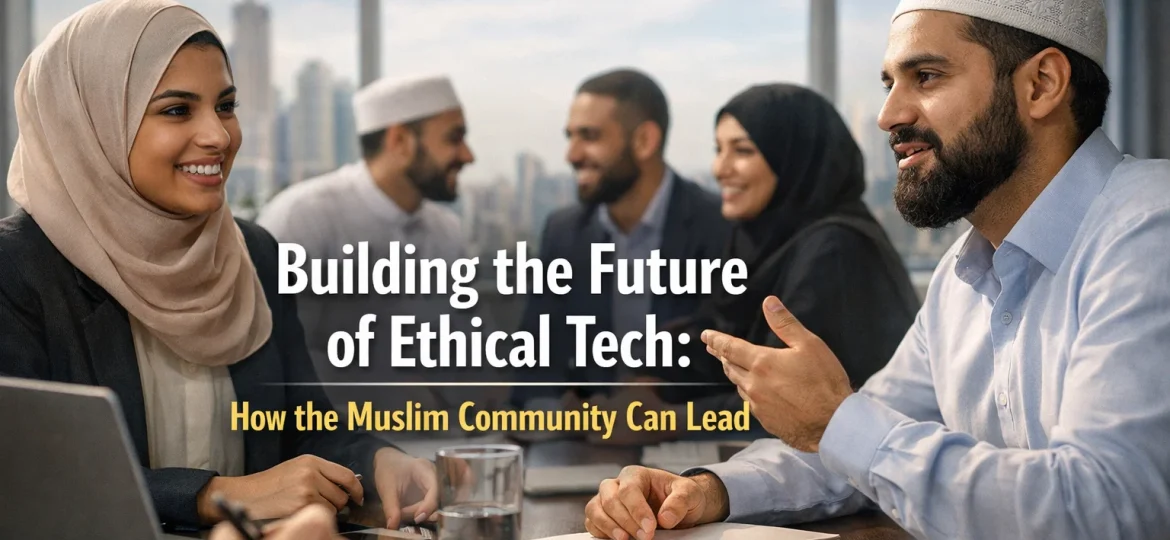
As Muslims, this is not just a concern. It is a call to leadership. The Ummah can play a central role in shaping ethical technology tools that serve humanity without harming faith, dignity, or truth.
The Qur’an teaches, “And thus We have made you a just community that you will be witnesses over the people.” (2:143)
This verse is more than spiritual guidance. It reminds us that Muslims are meant to lead by example, even in innovation.
What Is Ethical Technology?
Ethical technology is not only about efficiency or design. It is about purpose and impact. It answers questions such as:
- Does this tool protect human dignity?
- Does it promote honesty and fairness?
- Does it benefit people or exploit them?
- Does it align with moral and spiritual values?
In simple terms, ethical tech seeks to combine innovation with ihsan—excellence guided by conscience.
For Muslims, the foundation of ethical technology is the same as any good deed: intention. Every line of code, every app, every AI system must begin with a sincere purpose to serve humanity and please Allah.
Why the Muslim Community Must Lead
Muslims make up nearly one-fourth of the world’s population. Our global presence, diversity, and shared moral code position us uniquely to guide the future of digital ethics.
Here are three key reasons the Muslim community can and must lead in building ethical tech.
1. A Strong Moral Framework
Islam provides a comprehensive code of conduct that covers every part of life. Concepts like justice (adl), trust (amanah), modesty (haya), and truthfulness (sidq) are not optional—they are obligations.
These values form the backbone of ethical technology. Where others debate what is moral, Islam already provides a timeless foundation.
2. A Global Network of Talent
From engineers and designers to scholars and educators, Muslims are active in every part of the tech ecosystem. The community has the skills, creativity, and innovation required to lead—what is needed is shared purpose.
3. A Spiritual Approach to Responsibility
In Islam, innovation is not simply about success or profit. It is a trust. Muslims view knowledge and creation as blessings from Allah that must be used responsibly.
Technology guided by this mindset prioritizes well-being over control, transparency over manipulation, and service over exploitation.
The Current Problem with Modern Tech
Most of today’s technology is built with one goal: engagement. The more time users spend online, the more profit companies earn.
This model creates a cycle of distraction and dependency. It pushes content that attracts attention, even if it damages values, relationships, or faith.
Social media algorithms often amplify indecency, greed, and falsehood. Data is collected and sold. Privacy is treated as a commodity. Children are targeted by addictive entertainment.
This is not a neutral system. It is one designed for consumption rather than consciousness.
The Muslim community has an opportunity to model a different path—a system that values taqwa (God-consciousness) and service instead of manipulation and profit.
How Muslims Can Lead in Ethical Innovation
Leading the future of technology requires a balanced strategy that combines Islamic ethics, education, and collaboration.
Here are seven practical steps the Muslim community can take.
1. Develop Faith-Based Digital Principles
Muslim scholars and professionals should work together to define clear Islamic standards for technology. This includes guidelines for AI development, data use, and online behavior.
Just as we have halal food certification, we can establish halal tech standards—systems that verify privacy, modesty, and ethical use.
2. Invest in Halal Startups
Muslim investors often focus on traditional industries, but the future lies in digital innovation. Supporting halal tech startups means investing in software, cybersecurity, fintech, and educational tools that serve the Ummah and protect its values.
Early adopters of faith-based innovation are not just customers; they are partners in shaping the digital world.
3. Educate Youth About Ethical Technology
Young Muslims are the future developers, engineers, and content creators. Teaching them about Islamic digital ethics is essential.
Programs and courses can combine Qur’anic principles with modern skills, showing how technology can be used for dawah, education, and global good.
When youth understand that coding or designing can be an act of worship if done with sincerity, their work gains purpose.
4. Promote Responsible AI
Artificial Intelligence can transform industries but can also magnify injustice if misused. Muslims should take part in AI development that aligns with fairness and honesty.
Tools like Halal VPN already demonstrate this by using AI to block haram content while protecting privacy. The same principle can apply across healthcare, finance, and education—technology that serves, not manipulates.
5. Encourage Collaboration Between Scholars and Technologists
Scholars understand moral guidance; technologists understand systems. When they work together, the result is practical ethics in real-world innovation.
Imagine a research center where Islamic scholars advise engineers on creating faith-aligned algorithms, or a Muslim-led foundation that certifies ethical AI models. These are achievable goals when collaboration becomes a priority.
6. Raise Awareness Among Muslim Users
Ethical tech begins with ethical usage. Muslim families and communities should choose tools that respect faith, privacy, and time.
Adopting platforms like HalalVPN shows the market that Muslims demand clean, transparent, and moral technology. When users act with awareness, the industry is forced to follow.
7. Build a Global Vision of Digital Responsibility
The Prophet ﷺ said, “The most beloved of people to Allah are those who are most beneficial to others.” (al-Muʿjam al-Awsaṭ)
Muslim innovation should benefit all humanity. The goal is not to create isolated tools only for Muslims, but to lead the world in ethical practices.
A Muslim-developed system that protects privacy, promotes truth, and filters indecency benefits everyone, Muslim or not. This is how the Ummah fulfills its global responsibility.
Comparison: Ethical Tech Built on Faith vs Modern Tech Without Ethics
| Category | Ethical Tech (Faith-Based) | Modern Tech (Without Ethics) |
| Purpose | Serves humanity with moral awareness | Focuses on profit and engagement |
| Privacy | Respects user dignity and confidentiality | Collects and sells personal data |
| Content Control | Filters indecent or harmful material | Promotes what gains attention |
| User Impact | Improves well-being and balance | Encourages addiction and distraction |
| Accountability | Guided by conscience and faith | Driven by competition and revenue |
This comparison shows that innovation alone is not enough. Without values, technology becomes a tool of manipulation rather than empowerment.
The Role of Halal VPN in the Ethical Tech Movement
Halal VPN is an example of what happens when Muslims combine technology with taqwa. It uses intelligent filtering to keep browsing safe and halal while protecting user privacy and data.
By prioritizing faith, security, and transparency, HalalVPN represents the kind of innovation Muslims can lead—smart, ethical, and globally relevant.
Each user who adopts HalalVPN contributes to a larger vision: a future where digital safety and spiritual safety go hand in hand.
The Way Forward
To lead the future of ethical technology, Muslims must act with both conviction and collaboration. This means:
- Supporting Muslim innovators and startups.
- Educating the next generation of digital professionals.
- Encouraging research guided by Islamic ethics.
- Using and promoting halal tech tools.
- Making dua for wisdom and barakah in innovation.
We can no longer wait for others to build the systems that shape our lives. The time has come for the Ummah to create, certify, and lead technology that reflects its values.
Conclusion
Ethical technology is not a dream. It is a responsibility. The Muslim community has everything needed to lead this transformation: knowledge, numbers, and a moral compass rooted in revelation.
If we combine Islamic principles with modern innovation, we can build a future where technology serves humanity instead of exploiting it.
This is the vision behind tools like Halal VPN and other halal innovations. Together, they mark the beginning of a movement where Muslims take the lead in building a digital world guided by conscience, compassion, and faith.
When technology reflects our values, it becomes more than progress—it becomes service to Allah and benefit to mankind.
Frequently Asked Questions (FAQs)
1. What does ethical technology mean in an Islamic context?
It means developing and using technology that aligns with Islamic values such as justice, honesty, modesty, and privacy while serving the well-being of humanity.
2. How can Muslims contribute to ethical tech without being developers?
By choosing, supporting, and promoting halal technology. Every user who supports ethical platforms strengthens their presence and message.
3. What role do scholars play in digital ethics?
Scholars provide moral boundaries and principles that guide developers in creating technology that respects Islamic ethics.
4. Why is HalalVPN considered an ethical tech example?
Because it protects users from haram content, maintains privacy, and reflects Islamic principles of modesty and safety in digital life.
5. How can young Muslims prepare to lead in ethical innovation?
By combining technical education with Islamic studies and working on projects that bring faith and technology together.